When it comes to promoting your school, college, university or sixth form, getting your message in front of the right families at the right time is everything. Open days, open evenings, enrolment deadlines, sixth form taster days — these are time-sensitive events that need to reach parents and prospective students in your local area, quickly and effectively. Bus advertising is one of the most powerful and cost-effective ways to do exactly that. In this guide, we explain how bus advertising works for education, what formats are available, what it costs and why so many schools and independent colleges come back to it year after year. If you’d like to talk through a campaign, visit our bus advertising for education page or get in touch directly.
Why Bus Advertising Works So Well for Schools and Colleges
Bus advertising works for education establishments for one simple reason — buses go exactly where your prospective families are. They travel through residential streets, past secondary schools, along high streets and through town centres. Every day, thousands of parents, students and young people see the buses going past. Put your school on the side of those buses and you’re putting your message right in front of your target audience, in the places they actually live.
Unlike digital advertising, which can be scrolled past or blocked, a bus advert can’t be ignored. It’s large, it’s colourful and it’s out there in the community day and night. For schools trying to build awareness in a local catchment area, that kind of consistent, repeated visibility is incredibly valuable.
Bus advertising is particularly effective in the 6-8 weeks leading up to an open day or enrolment deadline — exactly when you need families to be thinking about your school.
What Bus Advertising Formats Are Available for Schools?
There are several formats to choose from, and the right one for your school will depend on your budget, your message and the level of impact you’re looking for.
Bus Rears — Great Value, High Visibility
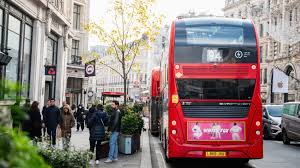
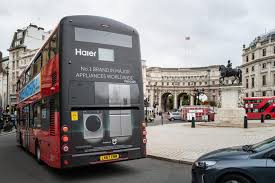
The bus rear — sometimes called a super rear or mega rear — sits on the back of the bus and is seen by every car, pedestrian and cyclist behind it at every set of traffic lights, every bus stop and every junction. It’s one of the most cost-effective formats available and works brilliantly for a simple, bold message. Perfect for promoting an open day date, a key selling point or a call to action like a website URL or phone number.
Streetliners — Maximum Coverage on Single Deckers
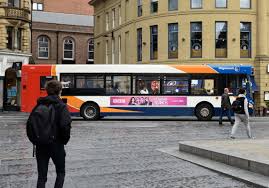
A streetliner runs along the side of a single decker bus and is one of the most popular formats in education advertising. Available in 10 foot and 13 foot sizes, a streetliner gives you a large canvas to tell your school’s story — headline, key message, open day date and contact details. They’re booked as single panels and available UK wide, making them ideal for schools wanting to cover a broad local area.
Supersides — Bold and Eye-Catching on Double Deckers
For maximum visual impact, a superside on a double decker bus is hard to beat. At 22 feet long, a superside is a genuinely impressive piece of advertising that commands attention on any road. If you’re an independent school or college wanting to make a real statement in your local area, a superside campaign delivers exactly that.
T-Sides — The Premium Option
The T-side is the near-side panel on a double decker bus — 22 feet long and 15 feet high, it’s one of the largest and most premium formats in bus advertising. T-sides are typically sold in packs and are more expensive than standard formats, but the impact is exceptional. For an independent school looking to make a bold, prestigious statement in its catchment area, a T-side campaign is well worth considering.
Full Bus Wraps — Ultimate Brand Impact
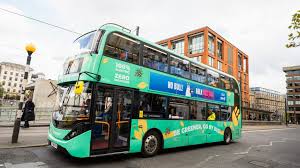
For schools or colleges with a bigger budget and a major campaign to run — a new building opening, a rebrand, a significant anniversary — a full bus wrap is the ultimate statement. The entire bus is wrapped in your school’s branding and imagery, turning it into a moving billboard that travels through your community every single day. On a daily rate basis, a full wrap is exceptional value for the level of impact it delivers.
For most schools running open day campaigns, a combination of bus rears and streetliners gives the best balance of coverage and cost. For independent schools wanting a premium look, supersides or T-sides are worth the extra investment.
How Much Does Bus Advertising Cost for Schools?
One of the things that makes bus advertising so attractive for education budgets is the price. For a standard format like a bus rear or streetliner, you’re looking at approximately £80 to £100 for a two-week period per bus. For a school wanting to run a focused local campaign in the weeks leading up to an open day, a budget of £500 to £1,000 can put a meaningful number of buses on the road in your catchment area.
Importantly, bus advertising rates are flat across the UK — advertising on buses in a major city costs the same as advertising in a smaller town. That’s great news for schools in urban areas who might assume city rates would be prohibitive.
One additional benefit worth knowing about — bus adverts often stay up a little longer than the period you’ve paid for. Suppliers won’t remove an advert until they have a replacement ready to go up, which means your school’s message can sometimes get a few extra days of visibility at no extra cost.www.focusmediauk.com/bus-stop-advertising
A two-week bus advertising campaign in your local area, timed to run 4-6 weeks before your open day, is one of the most cost-effective ways to drive awareness and registrations.
Which Bus Companies Cover My Area?
Most bus advertising across the UK is available on Arriva, Metroline and First Bus vehicles. Global Media typically manages the media contracts for these. Rather than approaching suppliers directly — which means paying rate card prices — working with a specialist education advertising agency like Focus Media UK means you’ll get better rates, better advice and a campaign that’s been planned specifically around your school’s needs and calendar.
What Should a School’s Bus Advert Look Like?
Bus advertising is a moving format, which means your creative needs to work fast. A bus travels past a parent or student in a matter of seconds, so your message needs to land immediately. Here’s what works:
• Keep it simple — one key message, not five
• Lead with your school name and a bold visual — make it instantly recognisable
• Include your open day date prominently — that’s the action you want people to take
• Add your website URL — short and memorable
• Use your school colours — consistency with your other marketing builds recognition
• Avoid small text — if it can’t be read in two seconds, it won’t be read at all
If you need help with artwork, our team handles design and production as part of the campaign — so everything is built to the correct specifications and ready to go. Get in touch to find out more.
When Should Schools Run Bus Advertising Campaigns?
Timing is everything in education advertising. The most effective bus advertising campaigns for schools are run in the 4 to 8 weeks leading up to a key date — an open day, an open evening, a sixth form taster day or an enrolment deadline. This gives families enough time to see the advert, register their interest and make plans to attend.
The most popular times of year for school bus advertising campaigns are:
• September to October — ahead of autumn open days and Year 7 / Sixth Form open evenings
• November to December — independent school 11+ and 13+ registration periods
• January to February — ahead of spring open days and sixth form application deadlines
• March to April — final push for enrolment and late open day events
Book your bus advertising campaign 4-6 weeks before your open day for maximum impact. Leave it too late and you’ll miss the families who plan ahead.
Bus Advertising vs Bus Stop Advertising for Schools — Which Is Better?
Both formats work well for schools and the honest answer is that a combination of the two is often the most effective approach. Bus advertising gives you broad coverage across your catchment area — your message travels with the buses through residential streets, past schools and through town centres. Bus stop advertising gives you the ability to cherry pick exact locations — outside a feeder primary school, near a local secondary, on a busy high street where your target families shop.
A typical education campaign might use bus advertising to build broad awareness across the catchment area, combined with a small number of carefully chosen bus stop sites near key feeder schools or community locations. Together, the two formats create consistent, repeated visibility that’s very hard to ignore.
Don’t put all your budget in one format. Bus advertising for broad coverage plus a few well-placed bus stop sites near feeder schools is a tried and tested combination that works.
Why Choose Focus Media UK for Your School’s Bus Advertising?
Focus Media UK has been working with schools, colleges, universities and independent schools for over 20 years. We understand education marketing, we understand the academic calendar and we understand the pressures of a school’s marketing budget. We handle everything — campaign planning, site selection, negotiation, print production and booking — so your team doesn’t have to. And because we work with all the major suppliers, we can get you rates that aren’t available direct. Visit our education advertising page to find out more about how we work, or get in touch today for a free no-obligation conversation about your next campaign.
Ready to Put Your School on the Bus?
Get in touch with the Focus Media UK team today. We’ll plan your campaign, handle everything from booking to print and make sure your school is visible to the families that matter — right across your catchment area.