A straight-talking guide from Focus Media Outdoor — over 20 years in the industry
If you’re a school business manager, headteacher or marketing lead wondering whether out-of-home advertising is worth the investment, the latest research has a clear answer. Here’s what the data says — and what it means for your next campaign.
OOH advertising for schools: what the research shows
Out-of-home advertising — bus shelters, billboards, supermarket screens, shopping centre posters — has long been a trusted format for school advertising campaigns across the UK. However, recent 2025 research from Clear Channel, Nielsen and TGI puts hard numbers behind what many school marketing managers already know instinctively: OOH works, and it works particularly well when you need to reach parents and prospective students in the places they actually go.
>In 2025, the education sector spent £23.3 million on OOH advertising in the UK — a clear signal that schools and universities are investing seriously in outdoor campaigns. But spend alone doesn’t tell the whole story. It’s the engagement figures that really stand out.
82%
57%
63%
49%
Source: TGI, Feb 2026 (index 128vs UK adult avg)
An index of 150 means prospective students are 50% more likely to take action after seeing an OOH ad than the average UK adult. That’s a significant uplift — and it makes a strong case for including outdoor advertising as part of any school advertising campaign plan.
Reaching parents where they actually are
One of the most common questions we hear from school business managers is: “How do we reach parents effectively?” Social media is often the first thought, but the research suggests OOH should be a central part of the answer — not an afterthought.
According to Touchpoints 2025 data, OOH reaches the highest number of parents throughout the daytime as a broadcast medium — outperforming other commercial media channels during the hours when parents are travelling, shopping and going about their daily routines. As a broadcast medium, OOH simply reaches more people, more consistently, than digital formats that rely on targeting algorithms and screen time.
The research shows that 83% of parents visit a supermarket at least once a week and 44% visit a shopping centre two to three times a month. Both of these environments offer excellent school advertising opportunities — and at a catchment-area level, they let you target the exact local parents you need to reach.
Why large format ads make schools stand out
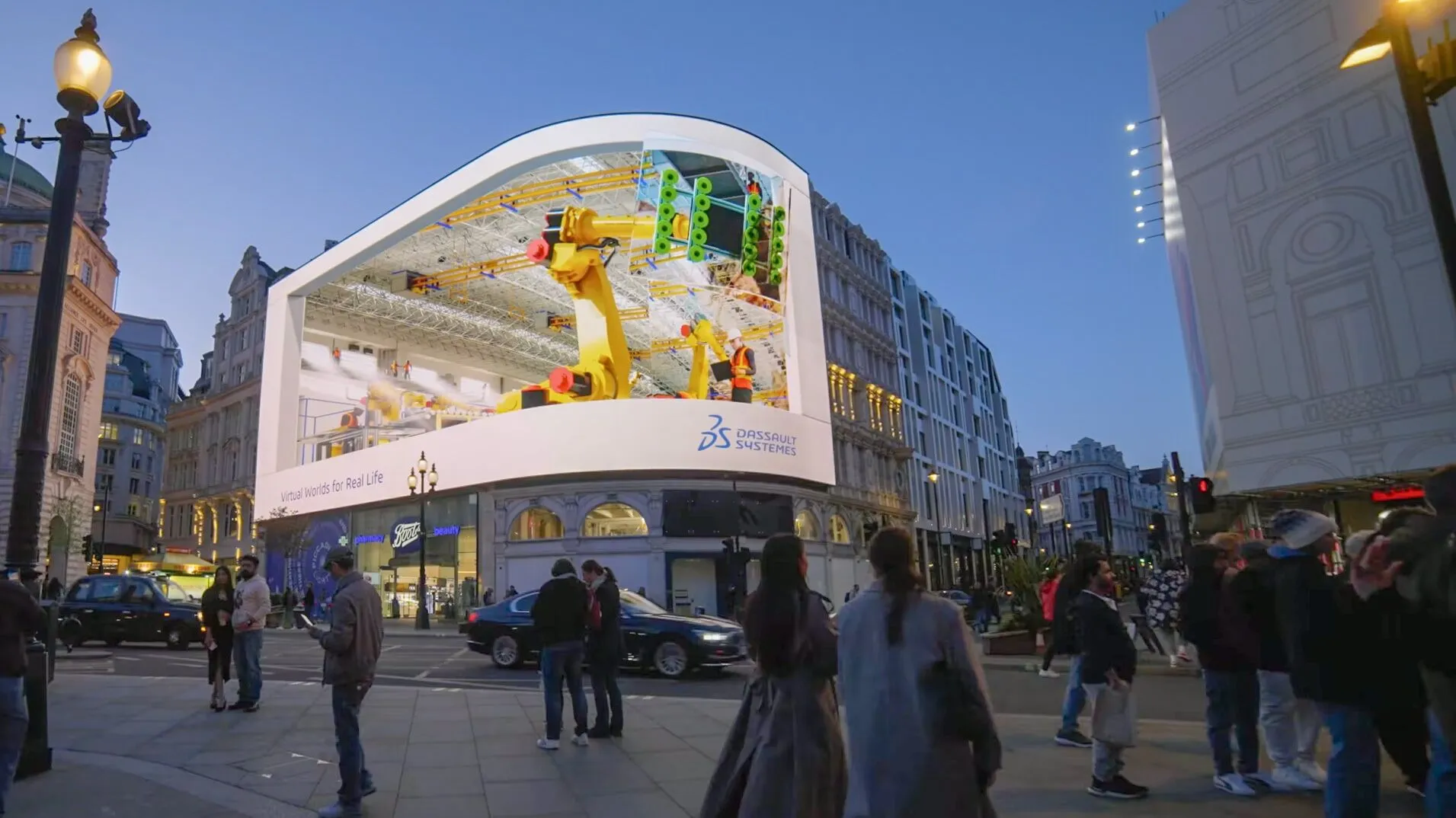
61% of prospective university students agree that large screens and posters make brands stand out — indexed at 131 against the UK adult average. For schools, academies and multi-academy trusts competing for pupil numbers in busy local markets, that visibility can make a genuine difference during open evening season.
Similarly, 58% of parents of primary and secondary school children agree that large-format OOH makes brands stand out (index 124). The message is consistent across both audiences: scale and presence matter in school advertising campaigns.
The OOH formats that work best for school advertising
Not all OOH formats are equal for school campaigns. Here’s a quick breakdown of how each format maps to your objectives, based on the research and our experience running school advertising campaigns across the UK:
Bus stop advertising for schools
Bus shelter advertising — known in the industry as Adshel — is one of the most effective formats for school open evening advertising. There are over 3,890 Adshel Live digital panels located within half a mile of schools across the UK, making this format uniquely well-suited to local catchment targeting. Parents and students pass these panels on the school run, when walking to local shops, and throughout their daily routines — exactly the kind of repeated exposure that builds awareness of your open evening or admissions campaign.
Supermarket advertising for schools
With 83% of parents visiting a supermarket weekly, in-store and car park advertising is an underused but highly effective way to reach families in your local area. Supermarket advertising for schools works particularly well for primary school open evenings and nursery recruitment, where the target parent audience shops close to home.
Billboard advertising for schools
Roadside billboards offer the broadest reach across a local area and are particularly useful for schools looking to build general brand awareness or promote a major event. Large-format billboard advertising for schools works well alongside more targeted bus shelter campaigns — providing the scale, while bus shelters deliver the frequency.
Shopping centre advertising for schools
Shopping centre advertising gives schools access to an environment where 44% of parents visit multiple times a month. Combined with the finding that large screens make brands stand out, shopping centre formats are worth considering for secondary school recruitment campaigns and sixth form open evenings.
What this means for your school advertising campaign
The data from TGI and Touchpoints 2025 reinforces what we have seen consistently over more than 20 years of running school advertising campaigns across the UK: OOH advertising reaches parents and prospective students at scale, in the moments that matter, and drives real action.
However, the research is only as useful as the campaign planning behind it. The right format, the right location, and the right timing are what turn a good stat into a successful open evening. That’s where independent, specialist advice makes all the difference.
If you’re planning a school open evening campaign, a sixth form recruitment drive, or a broader brand awareness push for your school or trust, we’d be happy to talk through the options with you — completely free of charge and with no obligation.
Planning a school advertising campaign?
Get free, impartial advice from specialists with 20+ years in education sector OOH advertising.
Get in touch with Focus Media UK.
Statistics in this article are sourced from: Clear Channel Education Category Spotlight; TGI February 2026 (audience: prospective university students and parents of children aged 4–18); Touchpoints 2025; Nielsen Ad Intel 2025 Calendar Year.